A recycling robot can create a business in more than one place: inside a sorting plant, through a service contract, or in the data gathered during each shift. The opportunity depends on a simple question: which cost does the robot cut, and who pays for that change?
Quick read
- Sell sorting capacity to plants that need more throughput.
- Charge for robot uptime instead of asking customers to buy hardware.
- Use material data to improve pricing, maintenance, and plant planning.
Sell sorting as a service
A recycling company may want automated sorting but lack the cash, staff, or technical team to run a new system. A robot supplier can place the equipment at the plant and charge a monthly fee, a fee per operating hour, or a fee linked to sorted material.
That model moves the sale away from a single hardware invoice. The customer pays for a working sorting job, while the supplier remains responsible for maintenance, software updates, spare parts, and remote support.
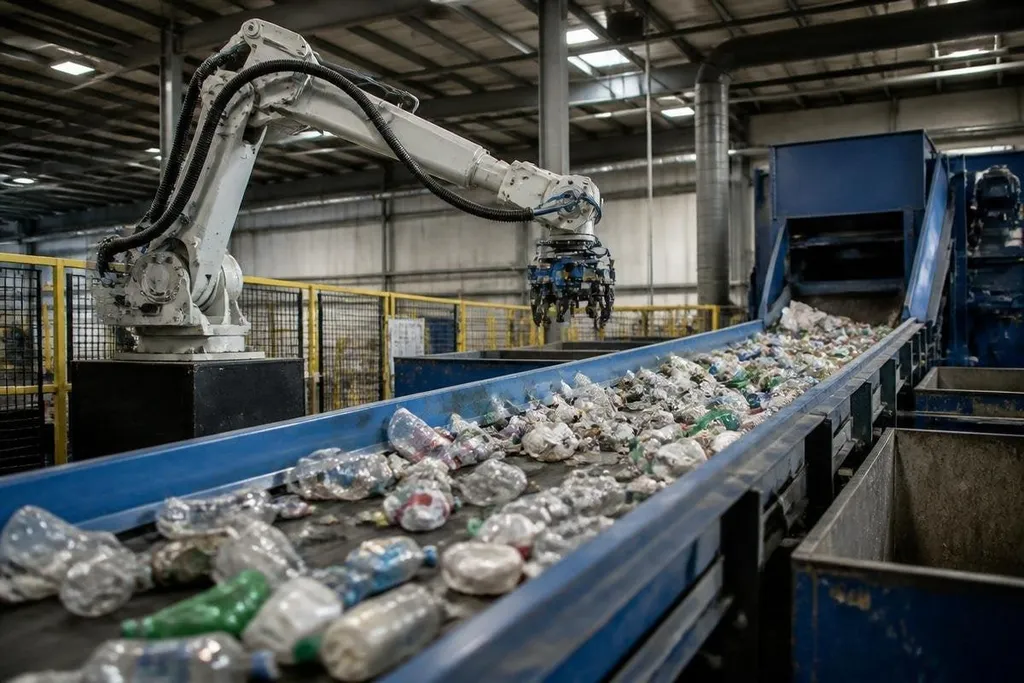
The machine still needs a clear job. A vision system can identify items by shape, color, label, or material type. A gripper or air nozzle then moves the item into a chosen stream.
If the system cannot show stable results during a plant trial, the contract should use a short test period and a clear way to measure success.
Build around the waste stream
Recycling plants handle different materials, so a general robot may be a poor fit. A business can focus on one hard problem, such as separating plastic types, removing unwanted items from paper, or picking objects from a moving belt.
That focus creates room for other sales. The company may supply the gripper, vision hardware, sorting software, conveyor changes, and operator training as one working package. Each part solves a plant task, which gives the buyer a clearer reason to spend money.
The risk sits in the material itself. Wet packaging, crushed containers, dust, labels, and tangled items can change how well the robot sees and moves. A system that works with clean test samples may need different lighting, tools, or belt speeds in a live plant.
Charge for uptime and maintenance
Recycling equipment earns money only while material moves through it. That creates an opening for companies that install, repair, inspect, and update robotic sorting systems.
A service contract could cover scheduled checks, worn gripper parts, camera cleaning, software logs, and response time after a fault. The contract needs plain limits: what the fee covers, how long a repair may take, and which parts the customer must keep on site.
Remote support can also become a product. A technician may review fault codes, motor temperature, cycle counts, and rejected items without travelling to the plant for every problem. The data has value only when it leads to a repair, a safer setting, or a better match between the robot and the material stream.
A buyer pricing a recycling robot needs more than its sorting rate. Robot24 can place the sensor setup, material stream, test site, and date beside that result. Those records can become the first service sold around the robot.
Sell the data around the robot
A sorting robot records what it sees and what it moves. Those records can show which materials arrive, how often contamination appears, when a gripper misses, and when a belt slows the work.
A plant may use that information to set better prices for incoming material, plan service visits, or change where loads come from. A recycler could also use regular reports to show customers how much material was recovered and where waste entered the wrong stream.
Data sales need care. The buyer should know what gets recorded, how long it stays stored, and who can read it. A report that helps one plant may expose details about another company's loads, contracts, or production patterns.
A practical buying and selling checklist
Before putting money into a recycling robot business, check these points:
- Name the material stream and the item the robot must move.
- Measure the current manual sorting cost during a normal shift, including missed items and stoppages.
- Set a paid trial with a defined sample, test period, and pass rate.
- Price service, replacement parts, travel, software, and operator training separately.
- Decide who owns image records, fault logs, and material reports.
- Keep a manual backup for dust, jams, mixed loads, and power loss.
I’d start with service contracts around one narrow sorting task, because recurring payment gives the supplier a reason to keep the robot working after installation.
The next business worth testing is the one that can prove its result in a live plant: fewer manual picks, cleaner material, or more hours of working equipment.